Posts

Who I am is More Important than What I am

Image
If you judge a group of people by their worst individuals, then NO group of people is innocent of hateful crimes and if you judge each individual by the social/ethnic groups they find themselves in, then every individual must be guilty of hateful crimes. This is what Marxism looks like. It doesn't care about the individuals, it only cares about the ideology. It puts people in groups and pits "haves" against "have nots" or "aggressors" against "victims" without ever looking at the individual actions of a person. Marxism would have you judge every individual based on WHAT they are and not WHO they are. If you do not judge all teachers or sports coaches based on the actions of the worst among them, if you do not judge all Hollywood directors based on the actions of the worst of them, then neither can you judge ALL priests nor ALL police officers based on the actions of the worst of them. There are sexual predators, physical abusers, and abusers ...

Catholic Social Teaching and Racism

I read through this document called Catholic Social Teaching and Racism. I want to comment on the following bits of it. The Many Faces of Racism: "Catholic teaching “emphasizes not only the individual conscience, but also the political, legal and economic structures...”[6] Racism is about people and about group behaviors and societal organization. Individual racism includes conscious acts, spontaneous attitudes, “the tendency to stereotype and marginalize,”[7] indifference, and “the triumph of private concern over public responsibility…” [8] "Laws such as U.S. segregation or South Africa’s apartheid [9] represent blatant systemic racism. More subtle racism treats groups as “second-class citizens with regard, for instance, to higher education, to housing, to employment and especially to public… services...”[10] Even more subtle racism is now masked in appeals to equality that guarantee that past inequalities are perpetuated by blocking corrective efforts. “At times protestati...

Inter-generational Trauma

Image
I don't know if any of this might also pertain to African Americans in the States, but I grew up in Northern Canada, among Cree people. Many of them had problems with alcohol, broken homes, depression, etc. No one talked about "intergenerational trauma" back in the '70s and '80s or the effects of residential schools. I've only started to hear about that in the last 10-15 years or so. But it makes sense to me. Generations of children were taken from their parents and brought up in institutions designed to strip their language and culture from them, turn them in to "Europeanized", good, Christian "Indians" whereupon they were returned to their communities - where they were lost because they did not know how to live out on the land, did not know the ways of their people anymore, did not have the proper means to support themselves because a European education was worthless in a community that didn't have European style jobs. Their people we...

101 Reasons to be happy, Reason number sixty-seven

Image
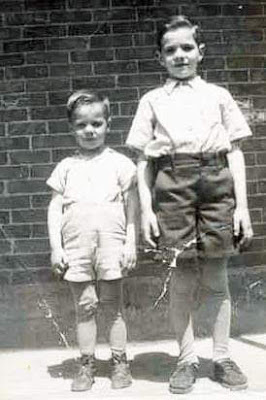
Old photos   

Catholic during coronavirus

Image
Since the beginning of the coronavirus shutdown, eating was never banned, only eating out in restaurants. Talking and writing were never banned, only restricted to the bare essentials in public places. Praying was never banned, only praying in groups in public places. Listening to music was never banned, only going to public concerts. Drinking alcohol was never banned, only drinking at public bars. And get this: masses were never banned, only public masses.  As Catholics, we believe that the Holy Mass is the most important prayer. Jesus's sacrifice on the cross is what saved the world and Holy Mass is the continuation of that sacrifice. The continuation, not the repetition, as protestants think, (there is a difference) of that sacrifice. On the night that he instituted the sacrament of the Eucharist, Jesus said: "Do this in memory of me." That's a direct order, and it's in the Bible. God made himself man and came to earth to save us from sin, but He doesn't ju...

A Comparison of Two Canadian Authors Whose Works have Inspired Me

Image
Farley Mowat and Lucy Maud Montgomery  (This was originally written for an English Composition class I had this past winter) What Canadian child has not grown up either laughing over the antics of Mutt, the dog that wouldn’t be, or at all the trouble Anne (with an E) Shirley got into, growing up at Green Gables? Farley Mowat and Lucy Maud Montgomery are two internationally renowned Canadian authors. However, they grew up in very different circumstances, in different places and at different times; this influenced their writing as we shall see. Both authors w rote endearing, sometimes funny, sometimes downright hilarious stories that have warmed the hearts of Canadians, as well as people around the globe, and are well worth the read, especially if you want a glimpse of what it is to be Canadian. Here, we will take a short look at their personal lives, the kinds of books they wrote, and their writing style. Lucy Maud Montgomery was born in 1874 and grew up on Prince Edward Island,...

101 Reasons to be happy, Reason number sixty-six

Image
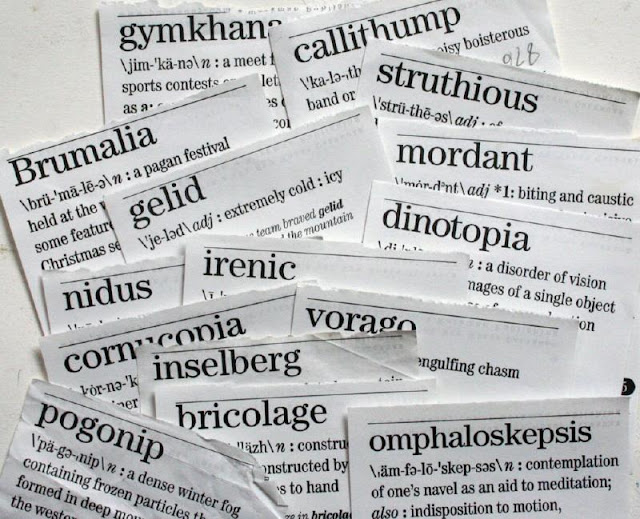
Words! Descriptive words, funny words, old words, new slang... The history behind the words, the culture, the imagination...  I am currently studying translation at Concordia University in Montreal. One of my classes was on the influence of the French language on the English language in Québec. In that class, we not only saw borrowings from the French language, such as "dépanneur" or "méchoui" for example, we also looked at Canadianisms. Words that are commonly used in the English language around the world, but that ALSO have a specific Canadian use (meaning.)  Here are a few examples: Canadianisms To table – bring forward for discussion or consideration at a meeting (parliament) ROC – Rest of Canada (parts of Canada outside of Québec) Have-not province – province whose per capita tax revenue falls below a certain average level, and is entitled to receive equalization payments from the federal government Drop the gloves – to remove one’s gloves (in hocke...